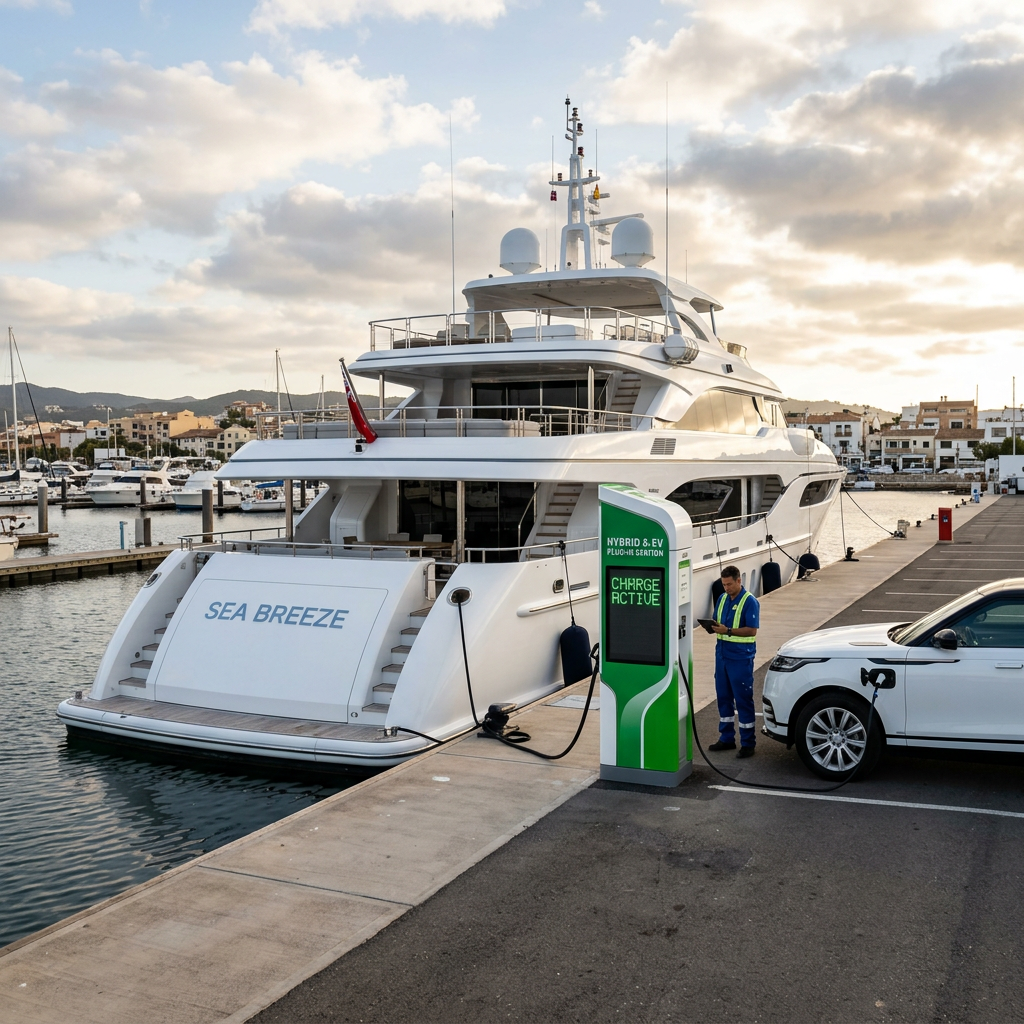
The Future of Yachting Is Becoming Smarter
For generations, yacht ownership has been associated with performance, luxury and freedom. The ability to travel further, entertain more guests and explore new destinations has driven innovation throughout the industry.
However, a new priority is shaping the future of yacht design: efficiency.
Hybrid propulsion has moved from being an experimental concept reserved for a handful of pioneering vessels to one of the most talked-about developments in modern yachting. Today, many of the world’s leading shipyards, propulsion manufacturers and technology companies are investing heavily in hybrid systems, battery storage and intelligent energy management.
But while hybrid technology is clearly advancing, one important question remains:
Are hybrid yachts truly ready for mainstream ownership, or are they still a technology waiting to mature?
The answer depends largely on the type of yacht, the owner’s expectations and how the vessel will be used.
What Is a Hybrid Yacht?
A hybrid yacht combines traditional diesel propulsion with electric motors, battery storage and advanced energy management systems.
Unlike a fully electric yacht, which relies entirely on battery power, hybrid vessels continue to use conventional engines when required. The advantage is flexibility: the yacht can select the most efficient method of operation depending on the situation.
A modern hybrid system may allow a yacht to:
- Cruise using diesel engines for long-range passages
- Manoeuvre silently using electric motors
- Reduce generator use while anchored
- Power onboard systems from batteries
- Optimise fuel consumption automatically
The goal is not simply replacing diesel engines. Instead, it is about making the entire yacht more intelligent.
Why Hybrid Technology Has Become a Major Trend
The growth of hybrid propulsion has been driven by several factors coming together.
Firstly, owners are increasingly interested in reducing the environmental impact of their yachts. Sustainability has become a major consideration, particularly among younger generations of yacht buyers.
Secondly, technology has developed rapidly. Battery systems have become smaller, lighter and more powerful, while software has improved the way energy is stored and managed.
Finally, owners have recognised that hybrid systems offer benefits beyond efficiency.
The appeal is not only about saving fuel.
It is about improving the ownership experience.
The Real Benefits of Hybrid Yachts
Silent Operation and Increased Comfort
One of the biggest advantages of hybrid technology is the ability to enjoy periods of near-silent operation.
Traditional yachts often rely on generators to provide power when anchored. While modern generators are far quieter than previous generations, they still create noise and vibration.
Hybrid systems allow batteries to provide power for many onboard systems without running generators continuously.
For owners, this means:
- Quieter nights at anchor
- Less vibration onboard
- More peaceful cruising
- A more refined experience
For many yacht owners, this is arguably the most noticeable improvement.
Reduced Fuel Consumption
Hybrid systems are particularly effective during low-speed operation.
Diesel engines are most efficient when operating within a certain range. However, yachts frequently spend significant periods manoeuvring, entering marinas or cruising slowly.
Electric motors are extremely efficient in these situations.
By combining both technologies, hybrid yachts can reduce unnecessary fuel consumption while maintaining the range and flexibility owners expect.
Lower Maintenance Requirements
Reducing engine and generator running hours can also have benefits from a maintenance perspective.
Less generator use means:
- Fewer service intervals
- Reduced wear
- Longer component life
- Lower operating costs
For yachts that spend considerable time at anchor, these savings can become meaningful over the lifetime of ownership.
Volvo Penta: Bringing Hybrid Technology to Production Yachts
One of the most significant developments in recent years has been the work of propulsion manufacturers such as Volvo Penta in bringing hybrid technology to a wider range of yachts.
Historically, hybrid propulsion has mainly been associated with large custom projects. However, the next stage of adoption depends on making the technology accessible to production yacht builders.
Volvo Penta has been developing hybrid solutions designed to integrate with existing marine propulsion platforms, particularly its IPS system.
Their approach combines:
- Traditional diesel engines
- Electric motors
- Battery storage
- Intelligent energy management
- Integrated vessel controls
The company has conducted trials with yacht builders, including Groupe Beneteau, to understand how owners actually use hybrid technology in real-world conditions.
These trials have highlighted that while efficiency is important, many owners value the lifestyle benefits just as highly:
- Silent manoeuvring
- Reduced noise at anchor
- Improved comfort
- More efficient onboard energy use
Volvo Penta’s development of systems such as the D13 IPS Hybrid demonstrates that hybrid propulsion is moving beyond concept projects and into production yacht applications.
This is a significant step because IPS propulsion is already widely adopted throughout the motor yacht market. As more manufacturers integrate hybrid capability into established platforms, adoption is likely to accelerate.
Why Smaller Yacht Trials Matter for Superyachts
It may seem surprising that some hybrid technology development is taking place on smaller yachts rather than immediately on large superyachts.
However, this is exactly how marine innovation often progresses.
Production yachts provide manufacturers with valuable real-world data:
- How owners actually use electric modes
- How much battery capacity is genuinely required
- How systems perform over time
- How crews interact with new technology
- What maintenance challenges appear
The lessons learned from a 50–70ft motor yacht can eventually influence the design of a 50-metre yacht.
This is similar to the automotive industry, where hybrid and electric technology developed in passenger vehicles before becoming common in larger commercial applications.
What Superyachts Can Learn From Commercial Shipping
While hybrid technology is developing in leisure boating, some of the most significant advances are happening in commercial marine sectors.
Commercial vessels operate under demanding conditions. Ferries, research vessels and offshore ships often operate thousands of hours per year, meaning efficiency and reliability are critical.
These industries have already adopted hybrid solutions because their operating profiles are well suited to the technology.
Examples include:
- Passenger ferries using battery propulsion
- Offshore vessels using hybrid power management
- Research vessels reducing emissions in sensitive environments
- Cruise ships implementing advanced energy systems
These vessels prove that large-scale battery technology is viable.
The challenge for superyachts is adapting this technology to a very different type of operation.
Why Superyachts Are Different
A ferry follows a predictable route.
A superyacht does not.
A yacht may spend one month cruising the Mediterranean, another crossing oceans and another sitting at anchor with guests onboard.
This creates unique challenges.
Superyachts need:
- Long range
- Reliability
- Flexibility
- Luxury-level comfort
- Independence from shore infrastructure
This means hybrid systems must be carefully designed around the owner’s intended use.
A yacht designed for short Mediterranean cruising will have very different requirements from an explorer yacht intended for remote destinations.
Explorer Yachts and Hybrid Technology
One area where hybrid technology is particularly well suited is the explorer yacht market.
Explorer yachts are designed around:
- Long-range cruising
- Extended periods away from marinas
- Efficient passage making
- Self-sufficiency
These characteristics align naturally with hybrid propulsion.
The ability to operate quietly in remote anchorages, reduce fuel consumption and maximise onboard efficiency is extremely attractive to owners exploring areas such as the Arctic, Antarctica or the Pacific.
As explorer yachts continue to grow in popularity, hybrid systems are likely to become increasingly common within this sector.
Are There Any Disadvantages?
Despite the excitement, hybrid propulsion is not perfect.
Higher Initial Cost
Hybrid systems remain more expensive than traditional propulsion.
The additional cost of:
- Batteries
- Electric motors
- Control systems
- Specialist installation
means buyers need to carefully consider whether the benefits justify the investment.
Added Complexity
Modern yachts already contain highly sophisticated systems.
Adding hybrid technology introduces additional complexity, meaning choosing an experienced builder and understanding after-sales support is essential.
Battery Development
Battery technology continues to improve rapidly, but it remains one of the areas requiring careful consideration.
Owners should understand:
- Battery capacity
- Expected lifespan
- Replacement costs
- Warranty coverage
- Service availability
Choosing the Right Hybrid System
Not all hybrid systems are the same.
When considering a hybrid yacht, buyers should look beyond the headline technology and understand how the system works in practice.
Important questions include:
- How long can the yacht operate silently?
- Which systems can be powered by batteries?
- How are batteries recharged?
- What happens during long passages?
- How experienced is the builder with hybrid installations?
- What technical support exists worldwide?
A hybrid system should complement the yacht, not simply be added as a marketing feature.
How Larkin Marine Can Help
The rapid development of hybrid technology creates both opportunities and challenges for yacht buyers.
With different builders adopting different approaches, comparing systems can be difficult. Technical specifications alone rarely explain how a yacht will perform in real ownership.
At Larkin Marine, we help buyers understand the wider picture.
This means looking at:
- How the yacht will actually be used
- Whether hybrid technology provides genuine benefits
- How different builders approach propulsion
- The long-term ownership implications
- Whether a particular system aligns with the owner’s priorities
As an independent consultancy, our focus is not promoting a particular builder or technology. Our role is helping clients make informed decisions based on their individual requirements.
The Future of Hybrid Yachting
Hybrid technology is unlikely to replace traditional propulsion overnight.
Instead, the future of yachting will probably be a combination of technologies:
- More efficient diesel engines
- Hybrid propulsion
- Improved batteries
- Alternative fuels
- Smarter energy management
The industry is moving towards a more intelligent approach to yacht design—one where performance, comfort and sustainability work together.
Hybrid yachts are no longer a distant vision.
They are already here.
The question for many buyers is no longer whether hybrid technology works.
It is whether their next yacht is the right opportunity to embrace it.
 Larkin Marine